GHK-Cu is a copper-binding peptide your body already makes. It has been studied for its role in collagen regeneration, tissue repair, and wound healing. Levels decline with age. That decline is one reason skin loses firmness and heals more slowly after 40.
I get asked about it constantly. Here is what I tell patients and what the research supports.
What is GHK-Cu?
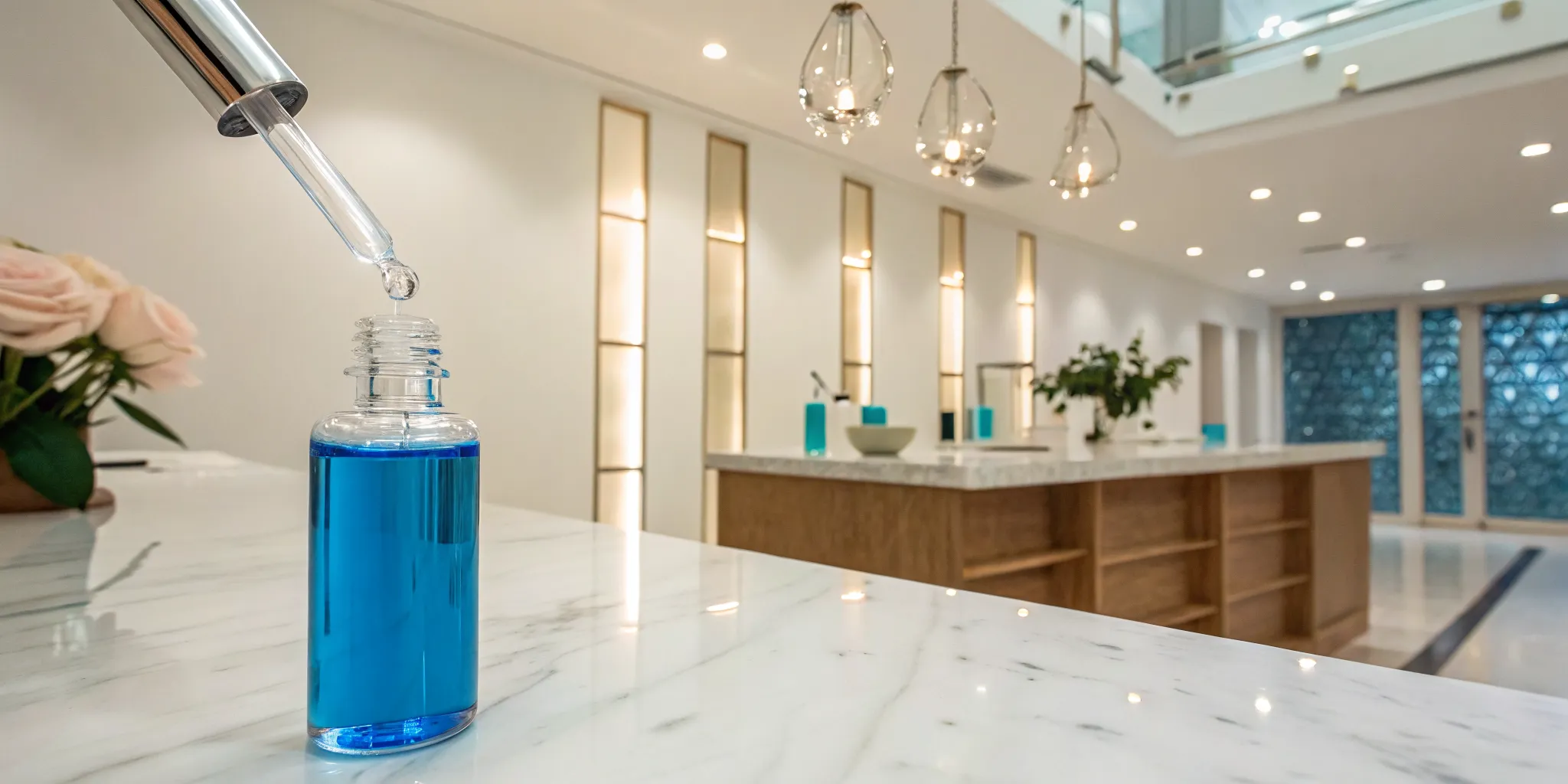
Copper peptide serums and creams have been studied for skin texture, fine lines, and barrier support. They have a long safety record in cosmetic use.
Injectable GHK-Cu is not FDA approved. It is available only through compounding, and the human research is thin. I say that plainly because most of what you read online does not.
What is in a Glow stack, and what I think of it
The blend sold online as GLOW combines GHK-Cu with BPC-157 and TB-500.
BPC-157 sits on the FDA's list of substances with safety concerns for compounding. TB-500 is not FDA approved either.
What I do instead
First, the blood panel. Before any peptide conversation, I run a full hormone panel alongside thyroid, metabolic markers, inflammatory markers, ferritin, and vitamin D. Most of what women bring me as a skin complaint turns out to be a hormone finding, a thyroid finding, or an iron finding.
Second, hormones. Estrogen drives collagen synthesis. Women lose 30 percent of skin collagen in the first five years after menopause. If estrogen is low and unaddressed, a peptide is working against a headwind. Hormone therapy comes first where it is appropriate. For many women it is the only intervention needed.
Third, the genomic layer where it helps. DNA-based testing can tell us how a given woman metabolizes hormones and which pathways are worth attention. It narrows the guesswork before anything gets prescribed.
Fourth, sleep and stress. Collagen repair happens overnight. A woman sleeping four hours will not out-supplement that, and I will not pretend otherwise.
Then, I add the peptides. I use single agents selected for that patient from a licensed compounding pharmacy. For skin, I like to start with topical GHK-Cu because it carries little to no risk.
Is GHK-Cu safe?
Topical use is well tolerated. Reported reactions are usually local and temporary. Redness, itching, irritation where applied.
Injectable use requires physician oversight. It is not appropriate during pregnancy or breastfeeding, with active or suspected cancer, or with Wilson's disease, a genetic disorder of copper metabolism. Anything you inject deserves a full history first, including allergies and current medications.
What to expect
I do not promise timelines. Response varies by starting point, hormone status, and what else is going on. Anyone quoting you a specific number of weeks is selling, not practicing.
How we measure it
You should not have to guess whether something is working.
Baseline photography. Standardized lighting, same angles, same distance, taken in the office at the start.
Baseline labs. The full panel above, so we have numbers to compare against rather than impressions.
Symptom scoring. You rate what you came in for, in your words, at the start.
Reassessment at 12 weeks. Repeat photography, repeat labs where indicated, repeat scoring. We look at all three together.
If the numbers have not moved and you do not feel different, we change the plan. That is the point of measuring.
How do I know if this is right for me?
You know from a workup. A new-patient consult with me runs 60 to 90 minutes. We take a full history, run the blood panel, and build a plan around what your data and labs show.
The bottom line
Test first. Correct hormones where warranted. Address sleep, stress, thyroid, iron. Then figure out whether peptides supplement or enhance the foundation that is already in place. A woman with low estrogen and floor-level ferritin will not be rescued by peptides.
Skin is an indicator for what is happening underneath in the body. My job is to find out what that is before I treat the skin.
Where to start
If you are considering GHK-Cu, a new-patient consult runs 60 to 90 minutes. We take a full history, run labs, and build an individualized treatment plan based on what your data and numbers show.
To book a consultation, call 310-772-0072 or visit bermansexualhealth.com.
Frequently asked questions
Is a copper peptide serum from Sephora the same thing?
Not the same, but not useless. Topical GHK-Cu has the better evidence base of the two routes. A well-formulated serum is a reasonable place to start.
Do I have to inject anything?
No. Topical is a legitimate option, and for skin it is where I prefer to start.
Can peptides replace hormone therapy?
No. They are not a substitute for estrogen, and I would be cautious of anyone who frames them that way.
How long before I know if it is working?
We reassess at 12 weeks with photography, labs, and your own scoring. That is when we decide to continue, adjust, or stop.
This article is for education and does not constitute medical advice or establish a physician-patient relationship. Compounded peptides are not FDA approved and may be incorporated into a personalized treatment plan only under physician supervision. Individual responses vary.