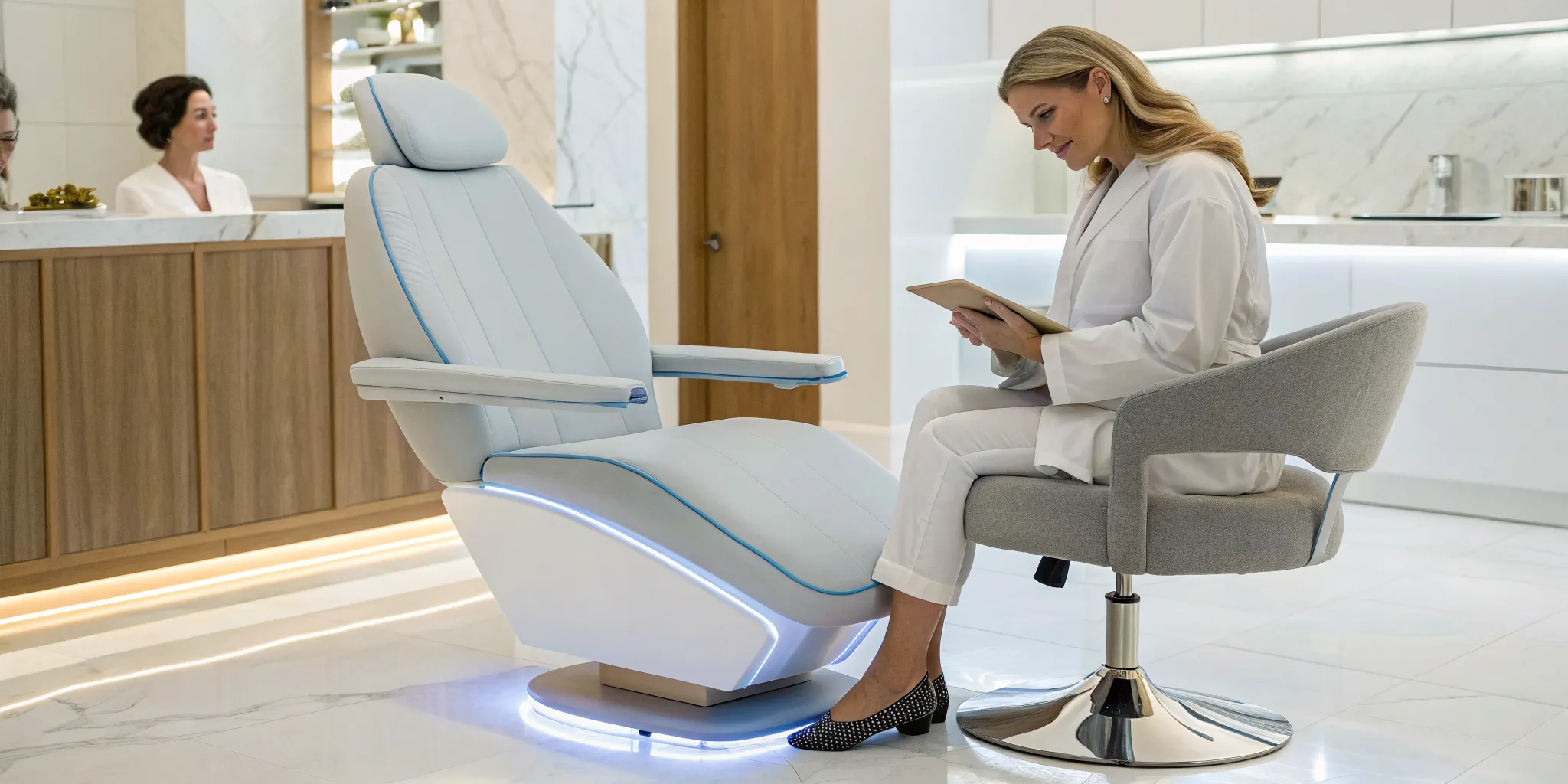

A chair that does thousands of Kegels for you in a single session sounds almost too good to be true. When you’re looking for a real solution to pelvic organ prolapse, you need more than just a compelling sales pitch; you need to know if the technology delivers on its promises. The Emsella chair uses high-intensity focused electromagnetic (HIFEM) energy to create deep, powerful muscle contractions, but what does that mean for your symptoms? We’re cutting through the hype to give you a straightforward look at this treatment. By analyzing the clinical data and what emsella chair reviews for prolapse reveal, we’ll help you understand its benefits, limitations, and what you can realistically expect.
Key Takeaways
- Strengthen your pelvic floor without downtime: Emsella is a non-invasive treatment that uses focused energy to create thousands of deep muscle contractions, rebuilding pelvic support without requiring surgery or recovery time.
- Know if it’s the right fit for you: This treatment is a great option for women with mild to moderate prolapse and related incontinence, but it’s important to know that other treatments may offer more significant correction for advanced cases.
- Compare passive vs. active treatments: Emsella strengthens muscles for you, while physical therapy actively teaches you coordination and control. A professional consultation is the best way to decide which approach will provide the most lasting results for your body.
How Does the Emsella Chair Work for Prolapse?
If you’re dealing with pelvic organ prolapse, you know the pelvic floor muscles are at the heart of the issue. These muscles form a supportive sling for your bladder, uterus, and rectum. When they weaken due to factors like childbirth or aging, they can no longer provide adequate support, leading to prolapse. The Emsella chair is a non-invasive treatment designed to address this root cause by strengthening your pelvic floor from the inside out.
Think of it as a powerful, targeted workout for muscles you can’t easily isolate at the gym. While you sit comfortably on the chair, fully clothed, it uses advanced technology to induce thousands of deep muscle contractions. This process, known as neuromuscular re-education, helps restore strength and control to the pelvic floor. By rebuilding this muscular support system, the Emsella chair can help improve the symptoms of prolapse and related issues like incontinence. It’s a straightforward approach that gets right to the core of the problem without requiring any downtime.
What is HIFEM Technology?
The science behind the Emsella chair is called HIFEM, which stands for High-Intensity Focused Electromagnetic technology. This may sound complex, but the concept is simple. The chair generates a focused electromagnetic field that safely passes through your clothes and skin to stimulate the motor neurons in your pelvic floor. This energy triggers what are known as supramaximal contractions, which are far more intense and numerous than what you could achieve with voluntary exercises like Kegels. The goal of this Emsella incontinence therapy is to make your pelvic floor muscles stronger and tighter, effectively rebuilding the foundation that supports your pelvic organs.
How Emsella Targets Your Pelvic Floor Muscles
During a single 28-minute session, the Emsella chair stimulates the entire pelvic floor, inducing more than 11,000 powerful contractions. This comprehensive muscle activation is a key advantage over manual exercises. While Kegels are beneficial, many people struggle to perform them correctly or activate all the necessary muscles. Emsella takes the guesswork out of the equation by ensuring the entire pelvic floor musculature is engaged and strengthened. This deep, consistent stimulation helps re-educate the muscles, improving their tone and ability to support your organs. By restoring this crucial support, Emsella can help alleviate the pressure and discomfort associated with prolapse and improve overall sexual and urinary tract health.
What Are the Benefits of Emsella for Prolapse?
When you’re dealing with pelvic organ prolapse, the main goal is to find relief that fits your life. The appeal of Emsella lies in its two-part promise: it directly addresses the root cause of the problem by strengthening your internal support system, and it does so in a completely non-invasive way. This combination makes it an attractive option for many women who want to feel stronger and more secure without surgery or significant downtime. Let’s look at how these benefits play out.
Strengthen Muscles and Relieve Symptoms
The core issue with prolapse is a weakened pelvic floor. These muscles act like a hammock, holding your pelvic organs in place. When they lose strength, things can start to shift. Emsella uses high-intensity focused electromagnetic (HIFEM) energy to trigger deep, powerful pelvic floor contractions. This process strengthens the muscles far more effectively than you could on your own.
As this muscular support system gets stronger, you may notice a significant reduction in prolapse symptoms like pelvic pressure and bulging. Many women also experience improvements in related issues, as clinical studies show that Emsella Incontinence Therapy can dramatically reduce urinary leakage. By rebuilding your body’s natural support structure, Emsella helps relieve the daily discomfort of prolapse.
The Perks of a Non-Invasive Treatment
Perhaps the biggest draw of Emsella is its convenience. The treatment is entirely external, meaning no incisions, no probes, and no downtime. You simply sit on the Emsella chair, fully clothed, for about 30 minutes while the technology does the work. One session can produce the equivalent of over 10,000 Kegel contractions, a feat that’s impossible to achieve manually.
After your session, you can immediately return to your daily activities, whether that’s heading back to the office or picking up your kids. This makes it easy to fit treatment into a busy schedule. Choosing a non-invasive path means you can address your sexual and urinary tract health without pressing pause on your life, offering a powerful solution without the complexities of surgery.
What Does the Research Say About Emsella for Prolapse?
When you’re considering a treatment like Emsella, it’s smart to look beyond the marketing and see what the clinical data says. While research specifically on Emsella for prolapse is still growing, we can learn a lot from studies on pelvic floor strength and related conditions like incontinence. This gives us a clearer picture of what the technology can realistically achieve and how it fits into a larger treatment plan. Let’s break down the current findings, compare Emsella to other options, and consider what experts in the field have to say.
Understanding the Current Research
Much of the existing research on Emsella focuses on its effectiveness for urinary incontinence, which is often linked to the same pelvic floor weakness that causes prolapse. The results here are quite encouraging. Clinical studies show that many patients experience a significant improvement in their incontinence symptoms, with some reporting a 50-75% reduction. By strengthening the pelvic floor muscles so effectively, the Emsella Incontinence Therapy provides foundational support that can also help manage the symptoms of mild to moderate prolapse. This research suggests that Emsella is a powerful tool for restoring muscle tone and function, which is a critical first step in addressing pelvic organ support.
How Emsella Compares to Surgery
It’s important to have realistic expectations when comparing a non-invasive treatment like Emsella to a surgical procedure. One prospective study directly compared Emsella therapy to anterior colporrhaphy, a common surgery for bladder prolapse. The results showed that surgery offered a more significant reduction in prolapse, with 88% of surgical patients achieving a complete correction (stage 0 prolapse). In comparison, 64% of Emsella patients saw their condition improve to stage 1 prolapse. While surgery may produce more dramatic results, Emsella provides a meaningful improvement without any downtime, anesthesia, or surgical risks, making it an excellent option for many women seeking vaginal rejuvenation.
Expert Opinions and Potential Concerns
Some healthcare professionals, particularly pelvic floor physical therapists, point out that Emsella is a passive treatment. You sit in the chair, and the technology does the work for you. In contrast, physical therapy is an active approach that teaches you how to engage, strengthen, and coordinate your pelvic floor muscles as part of a whole-body system. Experts note there aren’t yet good studies comparing Emsella directly to a comprehensive physical therapy program. This doesn’t mean Emsella isn’t effective; it simply means it’s one part of a larger wellness puzzle. A personalized consultation can help determine if Emsella is the right starting point for your pelvic pain treatment and overall goals.
Does Emsella Really Work for Prolapse? A Look at User Reviews
When you’re considering a treatment like Emsella, hearing from others who have been in your shoes can be incredibly helpful. Looking at user reviews and clinical results gives us a clearer picture of what to expect. While many women have found relief with Emsella, it’s also important to understand the full range of experiences to decide if it’s the right path for you.
Positive Reviews and Quick Results
Many women report feeling a noticeable difference in their prolapse and incontinence symptoms relatively quickly after starting Emsella treatments. It’s not uncommon to hear about significant improvements in bladder control and pelvic floor strength. In fact, some clinical studies indicate that many patients see a 50-75% reduction in their symptoms, which can be life-changing. For those seeking a non-invasive option that delivers fast results, these positive outcomes are a major reason why the Emsella chair is so appealing.
Mixed Reviews and Common Limitations
On the other hand, it’s important to know that Emsella isn’t a guaranteed fix for everyone. Experiences can vary, and some women find the results are less dramatic than they had hoped. For instance, a comparative study found that a surgical procedure resulted in a higher rate of prolapse correction compared to Emsella. Additionally, some experts point out that there isn’t much research directly comparing the Emsella chair to a dedicated pelvic floor physical therapy program. This means the treatment might not address underlying functional issues in the same way a hands-on approach would.
Can Emsella Make Prolapse Worse?
This is a common and valid concern. While there’s no evidence to suggest Emsella actively makes prolapse worse, it may not be effective enough for certain types of prolapse, which can lead to frustration if your symptoms don’t improve as expected. For example, one study indicated that surgical patients reported a greater improvement in their pelvic floor-related quality of life than Emsella patients. If the treatment doesn’t adequately strengthen the pelvic floor for your specific needs, you might not get the support you’re looking for, which is why a professional evaluation is so critical.
What Are the Risks and Limitations of Emsella?
While the Emsella chair offers a promising, non-invasive approach to strengthening the pelvic floor, it’s not the right fit for everyone. Like any medical treatment, it has its limitations and potential risks. Understanding these factors is key to setting realistic expectations and making an informed decision with your doctor. It’s important to have a clear picture of who benefits most from this technology and what it can and can’t do for prolapse symptoms.
Who Isn’t a Good Candidate for Emsella?
Emsella is a fantastic tool, but it’s not a universal solution. For women with severe prolapse, the muscle strengthening it provides may not be enough to resolve significant symptoms. It’s also important to consider the current state of your pelvic floor muscles. If your muscles are already too tight, a condition known as a hypertonic pelvic floor, the intense contractions from Emsella could potentially worsen pain or other symptoms. This is why a thorough evaluation is so crucial before starting treatment. A specialist can determine the root cause of your issues, whether it’s weakness, tightness, or something else, to guide you toward the most effective pelvic pain treatment.
The Limits of a Passive Treatment
One of the biggest draws of Emsella is that it’s a passive treatment; you simply sit while the technology does the work. However, this is also one of its limitations. Emsella is excellent at isolating and strengthening the pelvic floor muscles, much like doing thousands of Kegels. But in everyday life, your pelvic floor doesn’t work in isolation. It coordinates with your core, hips, and back to support you when you cough, laugh, or lift something heavy. Because Emsella doesn’t train this coordination, it may not fully prepare your muscles for the demands of daily activities. It’s often best used as part of a comprehensive approach to incontinence and pelvic health.
Short-Term Fix or Long-Term Solution?
Many women experience significant improvements quickly with Emsella, but it’s generally not a one-time cure. Think of it like starting a new fitness routine. You’ll build strength and see results, but you have to keep up with it to maintain those gains. Research and patient experiences show that the benefits of Emsella can last for many months, but they may begin to fade over time without maintenance sessions. To get the most out of your Emsella incontinence therapy, it’s helpful to view it as an ongoing part of your wellness plan rather than a permanent fix. Your doctor can help create a long-term strategy to keep your pelvic floor strong and healthy.
Emsella vs. Physical Therapy: Which is Better for Prolapse?
When you’re dealing with prolapse, you’ll likely come across two popular non-surgical options: the Emsella chair and pelvic floor physical therapy. It’s natural to wonder which path is the right one for you. While both aim to strengthen your pelvic floor, they work in very different ways and can offer different outcomes. Understanding these differences in approach, cost, and long-term results is key to making an informed decision that aligns with your health goals and lifestyle. Let’s look at how they stack up.
Comparing Treatment Approaches and Results
The main difference between Emsella and physical therapy lies in the approach: passive versus active. With Emsella, you sit fully clothed while the chair uses electromagnetic energy to induce thousands of muscle contractions. It’s a passive treatment. Physical therapy, on the other hand, is an active process. A trained therapist teaches you how to correctly engage, relax, and coordinate your pelvic floor muscles in sync with your breath and core. While there aren’t yet studies directly comparing Emsella to high-quality physical therapy, a comparative study found that surgery was more effective than Emsella for prolapse reduction, suggesting Emsella may be better suited for symptom management in milder cases.
Breaking Down Cost and Insurance Coverage
One of the most practical factors in any health decision is cost. Emsella treatments are typically sold in packages of six or more sessions, and the total can be a significant out-of-pocket expense. It’s important to know that Emsella is rarely covered by insurance, as it’s often considered an elective or cosmetic procedure. In contrast, pelvic floor physical therapy is frequently covered, at least partially, by many insurance plans. As some therapists note, the cost of a full Emsella package could instead pay for quality, one-on-one physical therapy that equips you with tools for long-term relief. Always check with your insurance provider to understand your specific coverage.
Why Many Experts Start with Physical Therapy
Many pelvic health specialists consider physical therapy the foundational first step for treating prolapse. Why? Because it’s a personalized approach that addresses the root causes of your symptoms, not just muscle weakness. A physical therapist looks at your entire system, including your posture, breathing patterns, and daily movements, to create a plan just for you. This holistic method teaches you how to use your body correctly to manage pressure and support your pelvic organs for the long haul. It’s about building a functional, resilient pelvic floor that works in harmony with the rest of your body, which is a key part of comprehensive pelvic health care.
What to Expect During Your Emsella Sessions
If you’re considering Emsella, you’re probably wondering what the treatment process actually involves. The good news is that it’s designed to be as simple and comfortable as possible. You can think of it as a dedicated, high-intensity workout for your pelvic floor, but all you have to do is sit down and relax. Let’s walk through what a typical treatment plan looks like and what you can expect before, during, and after your appointments.
Your Treatment Schedule and Session Details
A standard Emsella treatment plan is straightforward and designed to fit into a busy schedule. Most women undergo a series of sessions, typically two per week over four weeks. Each appointment is quick, lasting about 20 minutes. During that time, you’ll sit on the Emsella chair, which uses electromagnetic energy to create thousands of deep pelvic floor muscle contractions. It’s like doing over 10,000 Kegels perfectly in one session, giving your muscles a powerful workout without any effort on your part. This consistent stimulation is key to rebuilding strength and support for conditions like incontinence.
How to Prepare and What Happens After
One of the best parts about Emsella is how easy it is. There’s no special preparation needed before your session. You remain fully clothed and can even read a book or listen to music while the chair does its work. You’ll feel a tingling sensation and the contractions in your pelvic floor muscles, but it isn’t painful. Afterward, you can get right back to your day. There is absolutely no downtime or recovery period required, so you can head to work, run errands, or go to the gym immediately. This non-invasive approach makes it a convenient option for improving your sexual and urinary tract health without disrupting your life.
Is Emsella the Right Choice for Your Prolapse?
Deciding on the right treatment for pelvic organ prolapse is a personal choice, and it’s all about what works for your body, your symptoms, and your lifestyle. While Emsella offers a compelling, non-invasive option, it’s one of several tools available to help you feel your best. The key is to understand where it fits in the spectrum of care. For some women, it’s the perfect first step, while for others, a different approach might deliver better long-term results. Thinking through your specific situation and having an open conversation with your doctor will help you find the most effective path forward.
Who Is an Ideal Candidate for Emsella?
Emsella is often a great fit for women experiencing mild to moderate pelvic organ prolapse, especially when it’s accompanied by urinary incontinence. If you’re dealing with stress incontinence (leaking when you cough, sneeze, or exercise), this treatment can be particularly effective. Clinical studies show that many women experience a significant reduction in these symptoms after completing their sessions. Think of it as a powerful, targeted workout for your pelvic floor that you can’t replicate on your own. It’s an excellent choice if you’re looking for a non-surgical, comfortable treatment to regain muscle control and reduce leakage without any downtime.
When to Explore Other Treatment Options
While Emsella can be a game-changer for many, it may not be the most effective solution for more advanced stages of prolapse. Research comparing Emsella to surgical options, like an anterior colporrhaphy, has shown that surgery often produces more significant structural correction. For instance, one study found that 88% of surgical patients achieved a complete resolution of their prolapse, while 64% of Emsella patients saw improvement to a less severe stage. If your primary goal is to correct a more significant bulge or achieve the most dramatic improvement, exploring other pelvic pain treatments or surgical options might be a better path.
Key Questions to Ask Your Doctor
When you meet with your doctor, it’s helpful to come prepared with questions to make sure you’re choosing the best path for you. Since there aren’t many studies directly comparing Emsella to pelvic floor physical therapy, you can ask about the pros and cons of a passive treatment like Emsella versus an active one like physical therapy. You might ask, “What are the long-term benefits of learning to actively engage my muscles in physical therapy versus relying on Emsella?” It’s also wise to discuss cost and what you can expect from your investment. A conversation with an expert like Dr. Jennifer Berman can help clarify which approach will give you the most lasting relief.
Explore Your Options with Dr. Jennifer Berman
Choosing the right treatment for pelvic floor issues like prolapse means carefully weighing all your options. While Emsella is a popular non-invasive therapy, it helps to understand how it fits into the broader landscape of available treatments so you can make an informed decision.
Research shows that Emsella can be quite effective. Some clinical studies report that many patients experience a 50% to 75% reduction in urinary incontinence symptoms. However, it’s also important to see how it compares to more traditional methods. For instance, a prospective comparative study found that a surgical procedure called anterior colporrhaphy led to a superior improvement rate and a more substantial improvement in pelvic floor-related quality of life for patients with more significant prolapse.
Additionally, some experts point out that there’s a lack of research directly comparing the Emsella chair to a consistent pelvic floor physical therapy regimen, which is often a foundational treatment. This information isn’t meant to confuse you, but to empower you. Understanding the full picture is the first step toward making a confident choice for your body.
Every woman’s experience with prolapse is unique. A treatment that works for one person might not be the best fit for another. This is where a personalized consultation is invaluable. By discussing these findings and your specific symptoms with Dr. Jennifer Berman, you can create a plan that truly addresses your needs. Dr. Berman specializes in a comprehensive range of treatments for sexual and urinary tract health, ensuring your care is tailored specifically to you.
Frequently Asked Questions
What does an Emsella session actually feel like? You can expect to feel a distinct tingling sensation along with strong muscle contractions in your pelvic floor. It’s a unique feeling, but it shouldn’t be painful. You remain fully clothed and can simply relax, read, or listen to music during the 20-minute session while the chair does all the work.
How soon can I expect to see results from Emsella? Many women report feeling a difference after just a few sessions, with improvements becoming more noticeable as they complete the full treatment course. The standard plan is usually a series of sessions over a few weeks. The goal is to gradually rebuild muscle strength, so the results build over time.
Is Emsella a permanent fix for prolapse? Think of Emsella as an intensive fitness program for your pelvic floor. It builds significant strength, and the results can last for many months. However, just like any other muscle group, your pelvic floor requires ongoing attention to maintain its tone. Your doctor may recommend periodic maintenance sessions to preserve your results long-term.
Why would I choose Emsella over pelvic floor physical therapy? Emsella is a great option if you’re looking for a passive, non-invasive treatment that strengthens the entire pelvic floor without you having to learn specific exercises. It takes the guesswork out of isolating the right muscles. Physical therapy is a more active, hands-on approach that teaches you how to coordinate your pelvic floor with your core and breath. The best choice depends on your specific condition, preferences, and goals, which is why a professional consultation is so important.
Can Emsella help with other issues besides prolapse? Yes, absolutely. Because Emsella strengthens the entire pelvic floor, it is highly effective for treating stress urinary incontinence, which is the leakage that can happen when you cough, laugh, or exercise. By restoring the muscular support for your bladder and urethra, it helps improve bladder control and can contribute to better overall pelvic health.